Māyā: The Dream We Are Conditioned to Believe

In my late twenties, I realized I wanted to teach. I felt a deep calling to help children discover and develop their fullest potential. When I entered graduate school, I imagined I would learn not only how to teach but also how to cultivate curiosity, relationships, and a genuine love of learning. I believed education was meant to awaken something already alive within every child.
Instead, I found myself immersed in a system that rarely questioned its own assumptions. Most of what I learned centered on curriculum, classroom management, standardized testing, and measurable outcomes. Alternative approaches — holistic education, democratic schools, experiential learning — were mentioned only in passing, and little attention was given to the possibility that the structure of education itself might shape the way children come to understand themselves and the world.
After graduating, I entered the public school system full of hope. I wanted to believe that meaningful relationships with children could flourish despite the constraints. It did not take long for something inside me to begin to resist. Large class sizes, fragmented schedules, rigid curricula, and constant pressure to meet prescribed standards left little room to truly know the children sitting in front of me. I found myself moving from lesson to lesson, quietly wondering whether we were nurturing children’s humanity or simply teaching them to adapt to the institution.
Although I couldn’t yet explain it, I carried a growing sense that something was fundamentally misaligned. I watched naturally curious children become increasingly anxious, compliant, and concerned with getting the right answer. Their questions became fewer. Mistakes became something that was considered bad. Their confidence slowly shifted from trusting their own observations to seeking approval from authority. I knew I was witnessing something important, but I couldn’t name it yet. I recognized the symptoms, but I couldn’t see the underlying pattern.
A few years later, I was fortunate to join a small holistic school in Williston, Vermont, called Bellwether. Looking back, I can see that my years there changed me far more than my teaching did. They quietly began changing the way I understood human beings. At Bellwether, education unfolded through relationships rather than control. We listened carefully to our students and let their questions guide much of our learning. Instead of treating knowledge as isolated subjects to be mastered, we explored it as an interconnected whole that naturally crossed the boundaries of science, art, history, ecology, and storytelling. We spent much of our time outdoors, letting the forests, streams, insects, birds, and changing seasons become part of the classroom. Learning felt less like transferring information and more like participating in a living conversation with the world.
The children responded in ways I couldn’t ignore. They arrived eager to learn because they felt seen. Conflicts became opportunities to deepen relationships rather than occasions for punishment. Wonder emerged naturally whenever children felt safe enough to ask their own questions. Watching them, I couldn’t help but wonder why this way of learning felt so natural, while so much of conventional education felt like swimming against the current.
One afternoon our educational director asked me to write an article about the relationship between teacher and student. I welcomed the assignment, yet every time I sat down to write, the words refused to come. I sensed I had been witnessing something for years, but I couldn’t yet see it clearly enough to describe it.
Then, one winter evening, as snow drifted silently beyond my window, I stopped trying to think. I simply watched. The landscape slowly disappeared beneath fresh snow, and with it the noise in my own mind seemed to settle. As I sat there, years of experience quietly gathered into a single picture: the children I had taught in public schools, my years at Bellwether, my own childhood, my work as an adolescent counselor, and the persistent feeling that something about our way of living was profoundly out of alignment. For the first time, I could see the pattern. It wasn’t simply that our schools were failing children.
Our schools truly echoed the beliefs of the culture that shaped them, passing those behaviors and beliefs along to the next generation. For years, I thought culture was just the world we lived in. But that winter evening, I finally saw something I’d never looked at quite this way before. After reading Bury My Heart at Wounded Knee, I realized there are many different ways to live. I still hadn’t fully seen how much we, myself included, are immersed and conditioned into the worldview of our cultural system. Culture isn’t the world itself; it’s how we collectively interpret it.
As an infant, the world is full of wonder. There is no hate or care about what color your skin or eyes are, whether you are old or young, plant or animal, or whether you are naked. The Cosmos is open and full of mystery. Wonder is the guiding force.
However, the child began to be impacted by this dysfunctional culture and I began to protect my heart. The child begins to inherit their parents' conditioning, society's conditioning, and, through schooling, loses the open wonder and love that is their birthright. Cultural conditioning is woven from stories, beliefs, behaviors, values, fears, hopes, and assumptions handed down from one generation to the next. We inherit them so early that they become almost invisible. Long before we are old enough to question them, they quietly shape how we see ourselves, one another, and our place within life itself.
The deeper I looked, the more I realized that culture exists primarily through thought. Thought is one of humanity’s greatest gifts, but it is also limited and can easily distort reality. It allows us to navigate and remember where we live, recognize a friend’s face, solve problems, compose music, build homes, develop stories, and imagine possibilities that have never existed before. Without thought, deep, complex relationships and cultures would not exist. Yet thought is measurement and therefore is limited. It can describe life. It is a map. Thought can’t see beyond measurement, and reality can’t be measured. Thought cannot replace living, nor ever be fully present. It is not who we are.
A map may help us find our way through a forest, but no one would mistake the map for the forest itself. In much the same way, thought can point toward reality, but is never reality itself. Thought is built from memories, symbols, and interpretations shaped by past knowledge. For much of my life, I had unknowingly mistaken the map for the living landscape.
That realization helped me understand something I had sensed for years but could never quite articulate. Indigenous cultures were not so stuck to the map. They sensed their connection to themselves, their community, the ecological living landscape, and the Universe. However, our culture created the idea that we were separate from the Universe, and that the map, not reality, was the important thing. Thought projects itself. When born within a healthy system, it reflects health. When born out of a dysfunctional system, it reflects dysfunction and tries to bury love.
Education was and is the building of the map. The educational system isn’t simply teaching children mathematics, history, or language. It is also teaching them how to conform, feel isolated, and how to interpret reality. That realization helped me understand something I had sensed for years but could never quite articulate. The educational system isn’t simply teaching children mathematics, history, or language. It is also teaching us how to feel separate from the Universe by interpreting reality in terms of parts, categories, and beliefs.
In the Hindu tradition, there is a word that beautifully describes this process: Māyā. It is often translated as “illusion,” although I have come to think that the translation can be misleading. The snow falling outside my window that evening was not an illusion. The forests I had wandered, the rivers I had walked beside, and the laughter of the children at Bellwether were not illusions. And they are impermanent, and so, like a kaleidoscope, all forms that are born will die. The deception that we fall into, however, is far more subtle. The illusion is the tendency to mistake our thoughts, identities, and inherited stories for reality itself. In fact, we use these stories to create walls around our hearts, protecting ourselves from pain and trauma. When we forget this distinction, we begin living within the stories we have inherited rather than engaging directly with life. Without love, life becomes numb and lifeless. Love, indeed, brings pain and loss. Yet all things pass away. Horrors unfold within the drama of civilization. Love witnesses these horrors and grieves the pain they cause. In such moments, one is most alive. The irony is that closing ourselves off from love can lead us to commit genocide, ecocide, and suicide—to destroy ourselves and all life.
As I reflected on my years of teaching and, later, my work as a therapist, another pattern gradually emerged. Children are not born believing that they are fundamentally inadequate. They enter the world with love, wonder, curiosity, playfulness, a capacity for connection, and an eagerness to explore. Yet, somewhere along the way, they begin to close their hearts and measure themselves against others. They learn to seek approval, compare their worth, conceal aspects of themselves they wish to hide, and believe that who they are is somehow not enough. No child is born carrying this burden. It is conditioned—reinforced by a lack of love from adults who are already caught up in their own struggles, by authority, and by cultural influences—which leads to dysfunction.
The more I observed, the more I realized that fear quietly protects this conditioning. Once we have built an identity around the stories we’ve inherited, questioning those stories can feel like questioning ourselves. If I have spent my life believing that my worth depends upon achievement, status, approval, or belonging, then letting go of those beliefs can feel like stepping into unfamiliar territory. If I have dedicated my life to suppressing traumas and unwanted beliefs such as being foolish, unlovable, insufficient, selfish, or mean, I may come to accept this understanding, even though my conscious mind might reject acknowledging the shadow.
Perhaps that is why Māyā can be so difficult to recognize. It doesn’t deceive us through force. It simply becomes familiar. Over time, the roles we play begin to feel like who we are. We become students, employees, professionals, parents, consumers, citizens. These roles help us navigate society, yet they are only roles. The suffering begins when we forget they are roles and begin believing they define us completely.
As I continued watching both children and adults, I began noticing the same quiet longing beneath so many different lives. People sensed that something was missing. They longed for deeper, more vulnerable relationships, meaningful work, and a feeling of belonging that seemed just beyond their reach. They searched through achievement, possessions, entertainment, spirituality, addiction, success, relationships, and endless self-improvement. For a time, those pursuits often brought comfort, as if this next best thing would create happiness and fulfillment, yet the uneasiness would eventually return because the deeper question had never been asked.
What if the problem was not simply what we were pursuing? What if it was the lens through which we had learned to see ourselves? That question stayed with me for years. The more honestly I observed my own mind, the more I realized how much of my life had been spent trying to improve the person I believed myself to be, rather than questioning whether that image was ever the truth of who I was.
Very few of us are encouraged to pause long enough to look beneath the surface of our lives. We become so accustomed to movement that stillness itself begins to feel uncomfortable. We keep ourselves busy, not always because we enjoy it, but because busyness protects us from confronting the deeper questions waiting beneath the surface. Most of us, unconsciously, are deeply afraid of confronting our deepest vulnerability. We call that place boredom, creating a negative label to excuse ourselves from escaping. Boredom is the place where we finally sit with ourselves. True meditation. Being exactly where one is without escaping. Boredom is essential to understanding oneself.
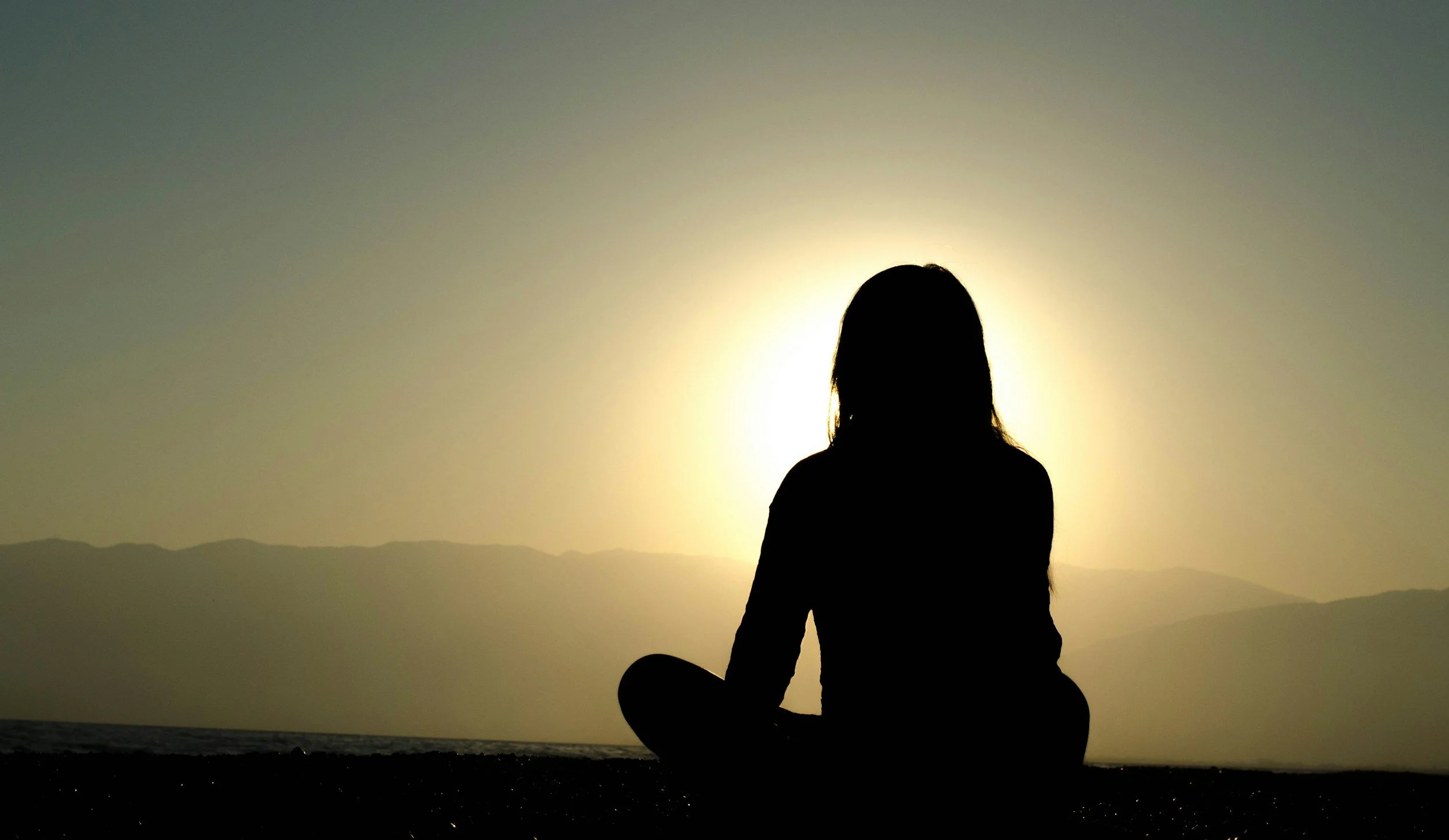
However, no matter how much I try to escape, I have found that those questions never disappear. They simply wait. Sometimes they wait beside a river. Sometimes they wait in a forest. Sometimes they arrive while watching snow fall beyond a quiet window. Whenever we become still enough to stop escaping, the stories we have come to believe begin to reveal themselves. What once felt unquestionable becomes open to inquiry. We begin to see that culture is not a fixed reality but a living story continually recreated through the beliefs we share and pass from one generation to the next.
It seems to me that genuine change begins there — not by replacing one ideology with another, nor by fighting against the world we are born into, but by learning to see it clearly and break open the false belief in separation. When enough people begin questioning the stories they have been given, culture itself begins to change, because culture has always lived first within us before it ever found expression in our institutions.
As I continued asking these questions of culture, I slowly realized I could no longer keep the inquiry at a distance. It wasn’t enough to examine the stories my society had inherited. I had to examine the stories I had inherited about myself. Looking back, I see a young boy who was deeply sensitive. I loved easily, felt deeply, and wanted nothing more than to belong. I loved all of life. I felt connected. There was a gentleness in me that noticed beauty, cared for others, and was naturally drawn toward love. At the time, I had no reason to believe there was anything wrong with who I was.
Then, around age 8, that began to change. For the next several years, I was bullied almost daily. I began to feel isolated, scared. Like many children, I didn’t understand why it was happening, nor did I have the emotional maturity to question the messages I was receiving. Instead, I quietly absorbed them, and quietly pushed down my fear, my pain, my sadness, and my confusion.
Without realizing it, I began to mistake other people’s judgments for the truth about myself. I came to believe that I was alone and weak. That I wasn’t very smart. That I wasn’t enough. That I wasn’t lovable. Those beliefs did not arrive all at once. They settled into me gradually, becoming so familiar that they no longer felt like beliefs at all. In fact, they were held unconsciously, a split between my conscious self and my unconscious. Without consciously knowing it, my unconscious did the best it knew how to try and keep these wounded beliefs safe. I subconsciously felt a need to assess safety with people, for this deep wound felt like at some point I would be hurt again, unloved, and rejected. Looking back, I can see that I wasn’t protecting myself from pain as much as I was protecting an identity that pain had created. If I accepted those stories before anyone else could use them against me, perhaps they would hurt less. For a while, that strategy seemed to work. But only for a while.
In the midst of deep grief, I began to see that the deepest wound had never come from the bullying itself. The deepest wound came from believing what it had taught me. Without realizing it, I carried those stories into nearly every relationship that followed. My navigational system became skilled at adapting to others’ expectations. I learned to read the room, and if I felt insecure, I could become whatever I imagined someone wanted me to be, quietly hoping that if I could be enough for them, they might accept or love me.
Somewhere along the way, I came to believe love was something I had to earn or perform for. I lived with a quiet fear that if anyone truly saw me as I was, they would eventually become like the bullies and come to believe that, beneath all my efforts, I was somehow unworthy of being loved. For many years, I never questioned that belief. I didn’t even consciously know it. Only much later did I begin to understand how Māyā works. It arrives as an unconscious identification. Painful wounding experiences in childhood normalize into a belief. The belief becomes a hidden identity, one we consciously don’t want to look at. Identity quietly shapes the way we experience ourselves and the world. We stop seeing life directly because we are looking through the lens of a story we never consciously chose.
My healing did not begin because I discovered a new philosophy or rationalized what was happening to me. It began when I finally sat beside that frightened little boy without trying to change him. For the first time, I could see him with compassion instead of judgment. I looked at the evidence. I saw that he had never been weak. He had been sensitive, open, vulnerable. That is a strength. He had never been unworthy. He had simply been deeply wounded unjustly by peers who themselves were struggling. Beneath every belief he had carried about himself, something remained untouched. Nothing had ever been wrong with him.
As that realization slowly found its way into my life, the stories that had shaped me for so many years began to loosen. They did not disappear overnight, nor did they vanish through effort or willpower. I kept leaning in, aware, not trying to change anything, and in that, I began to see the patterns I had been in, where they came from, and that they simply weren’t true. With awareness, digging deep into myself, they simply lost the authority they once held over me. Little by little, Māyā lost its grip.

Awareness is that fire. Awareness illuminates beliefs, identities, and conditioned thought patterns in complete presence. In the radiance of awareness, thoughts are merely illusions, dreams, or clouds disintegrating like mist. Recognized as false, they dissipate for lack of substance. Awareness does not contend, fix, or try to alter anything; it simply sees clearly. Clarity burns away the false.
Awareness serves as the antidote to Māyā. It is characterized by openness, boundlessness, and directionlessness. It has no destination and no desire to change or become anything. It perceives no intrinsic wrongness. It is devoid of a path. It embodies presence. Māyā cannot persist within awareness. The navigational system is still needed, but it is developed in a way that reflects the healthy values and integrity one wants to live by. Awareness does not cling to this navigational system, nor does the navigational system pretend that it is the real self.
The paradox, of course, is that one cannot try to be aware. Effort itself is another move in the game of Māyā. Even the thought, “I will now let go into awareness,” is still part of the dream. So what is one to do? Slow down. Surrender. See that there is nothing to do. Be exactly as you are. If you are afraid, be afraid. If you are anxious, be anxious. This is meditation.
In surrendering to the fact that the ego cannot achieve awareness, one is already seeing. In recognizing that the self cannot be aware, awareness is present. This quiet seeing — without effort, without becoming — is the beginning. To pause. To notice the movements of fear, identity, and becoming as they arise within oneself. Nothing needs to be changed, fixed, or improved.
In seeing clearly — without choice, without resistance — the full truth as you are right now. In that presence, when one is afraid, what happens to it? It dissipates for it not being fed by thoughts or avoidance. What remains is not an ideal or a future state, but a simple, living presence that has never been conditioned, never been divided, and never been lost. This seeing is the ending of the dream and the beginning of what is.
“There can never be peace between nations until there is first known
that true peace which is within the souls of men.”
Black Elk, Oglala Sioux
Confidence doesn’t always arrive with a bold entrance. Sometimes, it builds quietly, step by step, as we show up for ourselves day after day. It grows when we choose to try, even when we’re unsure of the outcome. Every time you take action despite self-doubt, you reinforce the belief that you’re capable. Confidence isn’t about having all the answers — it’s about trusting that you can figure it out along the way.
The key to making things happen isn’t waiting for the perfect moment; it’s starting with what you have, where you are. Big goals can feel overwhelming when viewed all at once, but momentum builds through small, consistent action. Whether you’re working toward a personal milestone or a professional dream, progress comes from showing up — not perfectly, but persistently. Action creates clarity, and over time, those steps forward add up to something real.
You don’t need to be fearless to reach your goals; you just need to be willing. Willing to try, willing to learn, and willing to believe that you’re capable of more than you know. The road may not always be smooth, but growth rarely is. What matters most is that you keep going, keep learning, and keep believing in the person you’re becoming.
